About 26% of the energy density of the universe is dark matter, yet everything we know about it comes from its gravity. My research is driven by a single question: what is dark matter? This means understanding what keeps it stable, whether it is a single particle or a whole dark sector, how it acquired its abundance in the early universe, how it communicates with ordinary matter, however faintly, and how we can probe it. The continued null results of direct detection experiments do not close these questions. They sharpen them, and point toward signals that conventional searches are not designed to see.
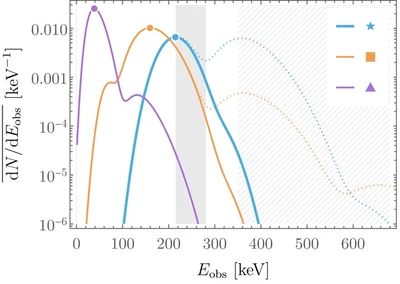
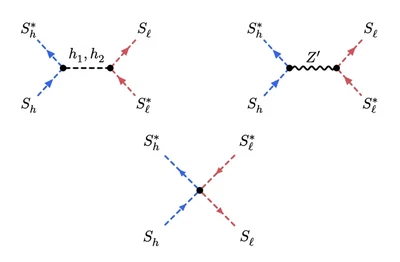
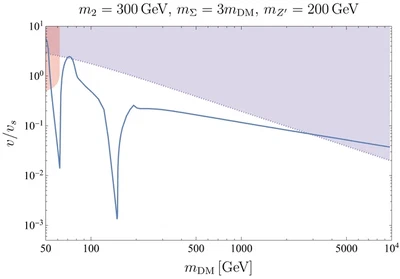
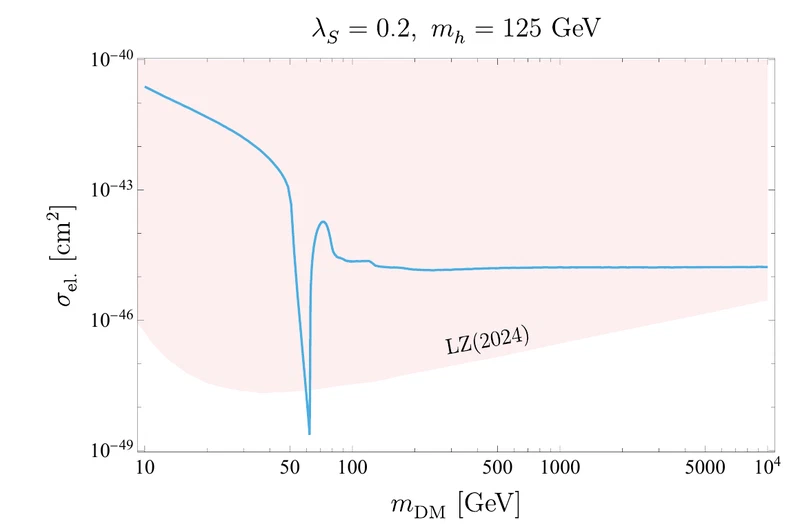
Symmetry as a guide. Much of my work builds dark sectors in which symmetry does the heavy lifting. In pseudo-Nambu-Goldstone boson (pNGB) dark matter, the dark matter is the Goldstone mode of a spontaneously broken global symmetry, which suppresses its scattering off nuclei while keeping annihilation efficient; a soft explicit breaking gives it mass, and residual symmetries make it stable. Richer symmetry structures lead to multi-component dark matter with semi-annihilation, conversion between species, and long-lived excited states. These dynamics can produce boosted dark matter and exothermic nuclear recoils, signatures testable at neutrino and direct detection experiments.
New ways to look. I am also working on unconventional probes of dark matter’s properties. Even electrically neutral dark matter could carry electromagnetic moments, and the damage tracks it would leave in billion-year-old minerals turn paleo-detection into a kiloton-year experiment. On the cosmological side, I study how hidden sectors can leave imprints on the universe, for example by amplifying cosmic magnetic fields through an oscillating non-Abelian condensate. Together, these directions aim to connect model building with measurable properties, and ultimately to pin down what dark matter is.